Showing posts with label Travel. Show all posts

Saturday, November 12, 2016

Flora of Albuquerque

We could all use some pretty plants to look at this week, so here's my collection of plant photos from our trip to New Mexico. Sorry it's taken a month to get up! And I still haven't found IDs for everything, but the relaxing thing about admiring the desert landscape is that I can't grow any of these plants myself so knowing exactly what they are is irrelevant, except for the must-label-now! part of me which I will suppress.

All of these photos were taken in the Sandia Heights neighborhood where we were staying. Here's the view from the deck of our lovely hosts' house:


Only small areas around the houses can be walled in and/or cultivated; the rest is pretty much wild, and the house colors blend in to the environment, so it really makes for a gorgeous landscape in which the human influence is minor. (Also you could see Balloon Fiesta flights from the deck with binoculars. I think some of those dots in the sky might be balloons. Or, you know, dust on the lens.)

Here's some of what we saw on walks around the neighborhood, starting with cactus plants:


Prickly pear fruiting
Different type of prickly pear
Chollas in landscape. Should be coded keys to solve something...

Cholla closeup
Albuquerque is high up and has a temperate climate; yes, there are cacti, but they get snowed on. (After all, we have prickly pears in the East too - I have one in my front yard.) Not all cactus types grow there; if you see something like this:


it's a birdfeeder. (The agaves are fake too.)

This is Cucurbita foetidissima, stinking gourd or buffalo gourd (many other names), which is an invasive pest:


I'm not sure what this plant is, though it looks nightshady:


Here are some more plants I saw on walks:

Apache plume (Fallugia paradoxa)

Juniper, loaded with berries

Aster

A Datura of the sort O'Keeffe painted

Remains of towering agave bloom
And of course the chamisa (Ericameria nauseosa), and yes, it does resemble heather, though I don't think the smell is nauseating at all. In October it was the bright yellow that pulled the landscape together, as if it had been sown throughout in design.


Yes, I took the walk on purpose on a cloudy day for photographic purposes. I took a few other plant photos on our explorations of various Park Service sites, but they didn't turn out as well in the brilliant sunshine. But this is enough to be going on with. Nice memories! I'm not sure I'd love gardening in this region - the palette is beautiful but limited - but it's fascinating to visit.


Sunday, July 17, 2016

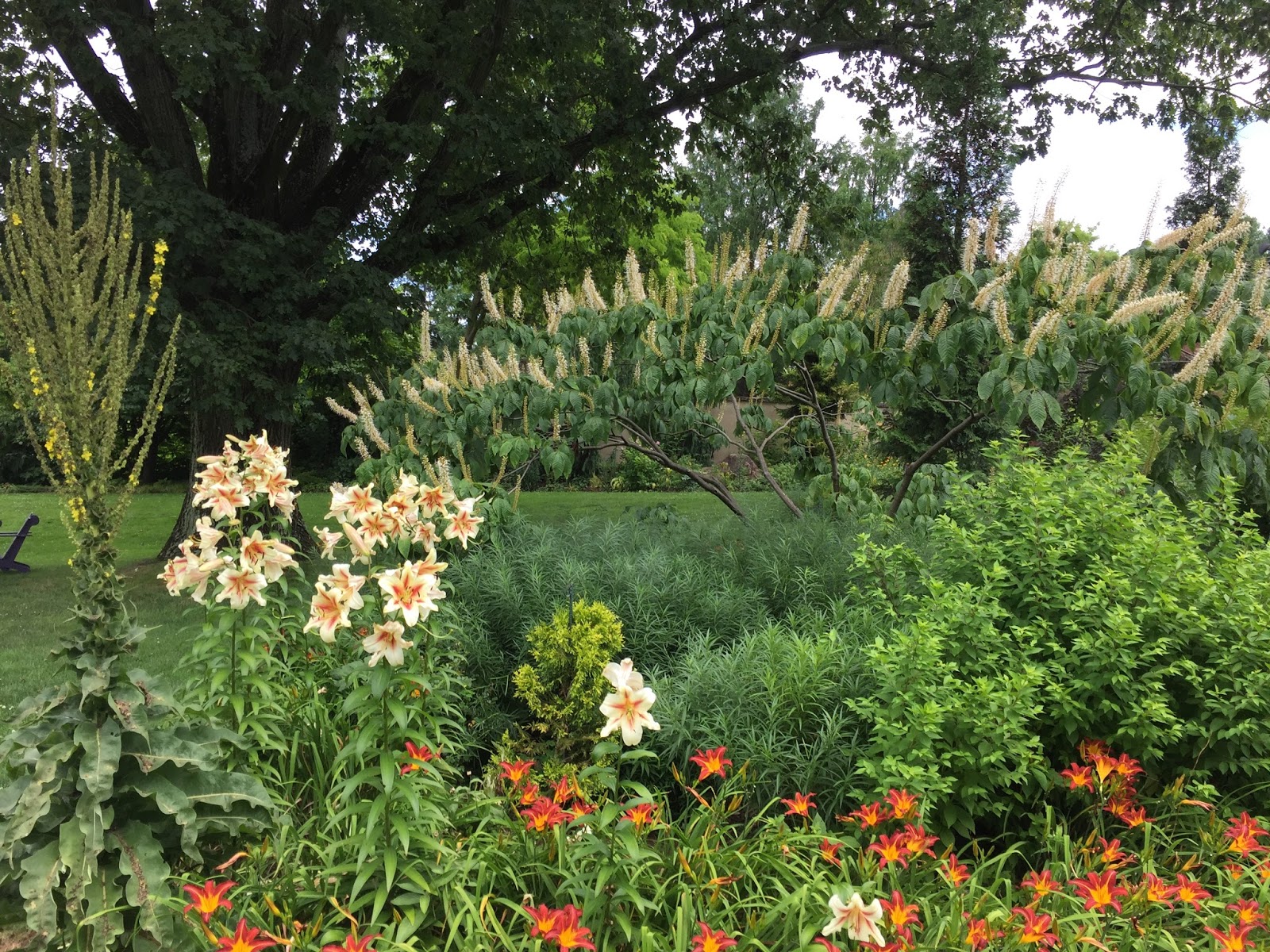
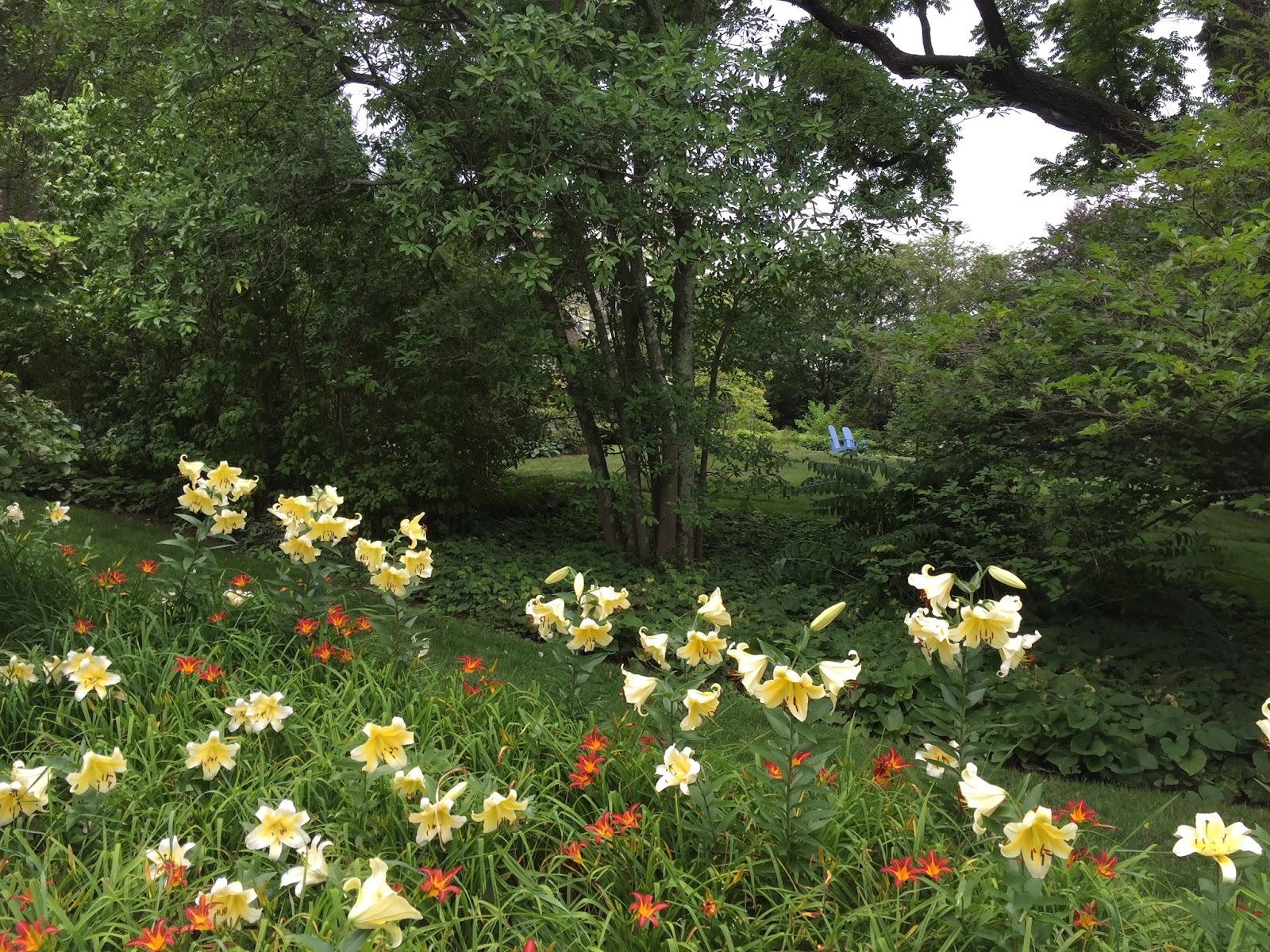
Chanticleer, mid-July

We were at Chanticleer on Friday (which was a good reason not to be posting about my own garden for GBBD). My third visit, and took my husband and son for their first. Just as lovely in July as other times, and we managed to hit a period that wasn't too hot - or at least it was less humid and with a nice breeze.

Mini-meadow behind the mansion

Help, I've fallen

...or am drowning...

The succulent craze finds the ruin

Framing (1)

Framing (2)

This oak has very odd acorns
Silver theme in the gravel garden

View of the Serpentine, which is corn this year

Mickey Mouse cactus!

Great combo of Russian sage and Verbena bonariensis

At the bottom of the hill the ruin is on top of

Pond

Mini-pond

All the following from the Tennis Court Garden:

Nice idea for top of a wall (or banister)


And that's all the photos, though not everything we saw by far. Now back to the far less lovely and much more weedy garden at home...

Wednesday, September 30, 2015

Seed Savers Exchange visit

I figured while I was in Iowa (for the International Master Gardener Conference) I should visit Seed Savers Exchange, an organization I hold in high regard. This idea of proximity only makes sense in the context of my drive through large portions of the Midwest, because it took me about 6 1/2 hours, including short stops, to drive from Council Bluffs to Spillville, where I had a B&B booked. Then the next day I drove fifteen minutes or so further on to north of Decorah, where SSE has their farm.

SSE promotes and practices the saving of history: heirloom vegetables, flowers, fruits, animals, and whatever else comes their way. The organization is actually spread throughout the country and the world, and I could have visited it by finding one of my most local Seed Exchange members, someone who's listed in SSE's annual directory of seed savers offering heritage seed for sale. Or I suppose really SSE is as close as my own garden, since I've bought seeds from them and grown them out. I am a member of SSE, but I don't list seeds - generally I only save enough to give out locally. Members get the big directory (as opposed to the smaller publicly-available catalog, which has quite enough in it for most people really) and discounts on merchandise.

Anyway, local is important, but a national headquarters has a vibe, so I went. Aside from the snazzy visitor's center, SSE HQ is a working farm, with seed preservation gardens tucked away in corners for less contamination by foreign pollens. I didn't get to those gardens on this visit (some of the trails were out, due to summer flooding), but I did manage quite a hike after seeing the demonstration and trial gardens close to the parking area. Photos below.

View of Diversity Garden and buildings
Sorghum in trial garden
Spectacular cleome
Diane's Garden, with sun effect
View through Diane's Garden to barn
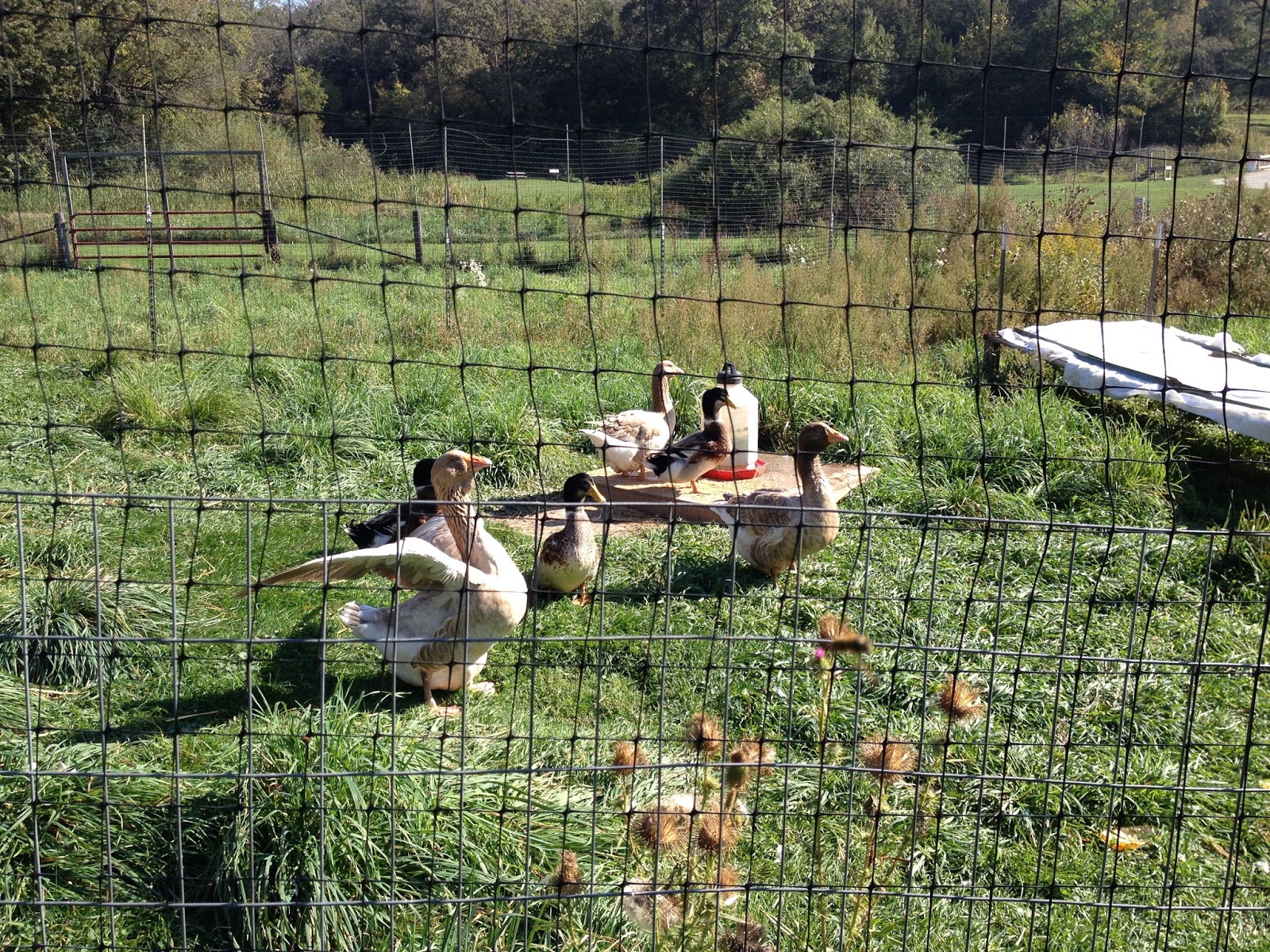
Ducks and geese
Heirloom cattle
The cattle (Ancient White Park, described here) were very curious about me as I walked a 3 3/4 mile loop around their pasture. It was good to stretch my legs a bit before driving the rest of the day (all the way to Indiana, yikes).

I've been home almost two days now - it's good to be back and not driving so much! Not much gardening in sight immediately as we've just had a big rain front go through and it looks like a hurricane will be passing by this weekend, but at least the plants are finally getting watered? It never rains but it pours, yup.

Monday, September 21, 2015

Missouri Botanical Garden

Several days ago I went to the Missouri Botanical Garden in St. Louis. (I've since spent the weekend in Kansas City and am now in Omaha, NE, but have finally managed to get around to updating.) I was looking forward to the visit a lot, since the garden has a stellar reputation and I'd used their online educational resources many times, and it did not disappoint.

Here are some photos I took, which cover but a few of the many places in the garden.


The garden has Victorian origins, and I like how they honor that in various places throughout with formal and informal beds in outrageous colors. This is near the entrance, but there's a whole Victorian District that I probably only took one photo of.


Cute little cactus.


Entrance to the rose garden (one of the rose gardens). That's a glass sculpture in yellow.


More glass inside the big tropical conservatory. I took a similar photo at the Lewis Ginter garden in Richmond. It's a thing, I guess.


There's a whole separate temperate conservatory, which is where they put the plants they wish would live outside in the winter but which just don't.


In the big WONDERFUL home demonstration garden area, an accessible garden plan.


Part of the vegetable garden in the same area: okra and Malabar spinach, cornering the market in mucilaginous textures.


I was just amused that the aggressive annual vines covered up the educational composting sign. Whoops!


View across the lake. The Japanese garden is along its edges.


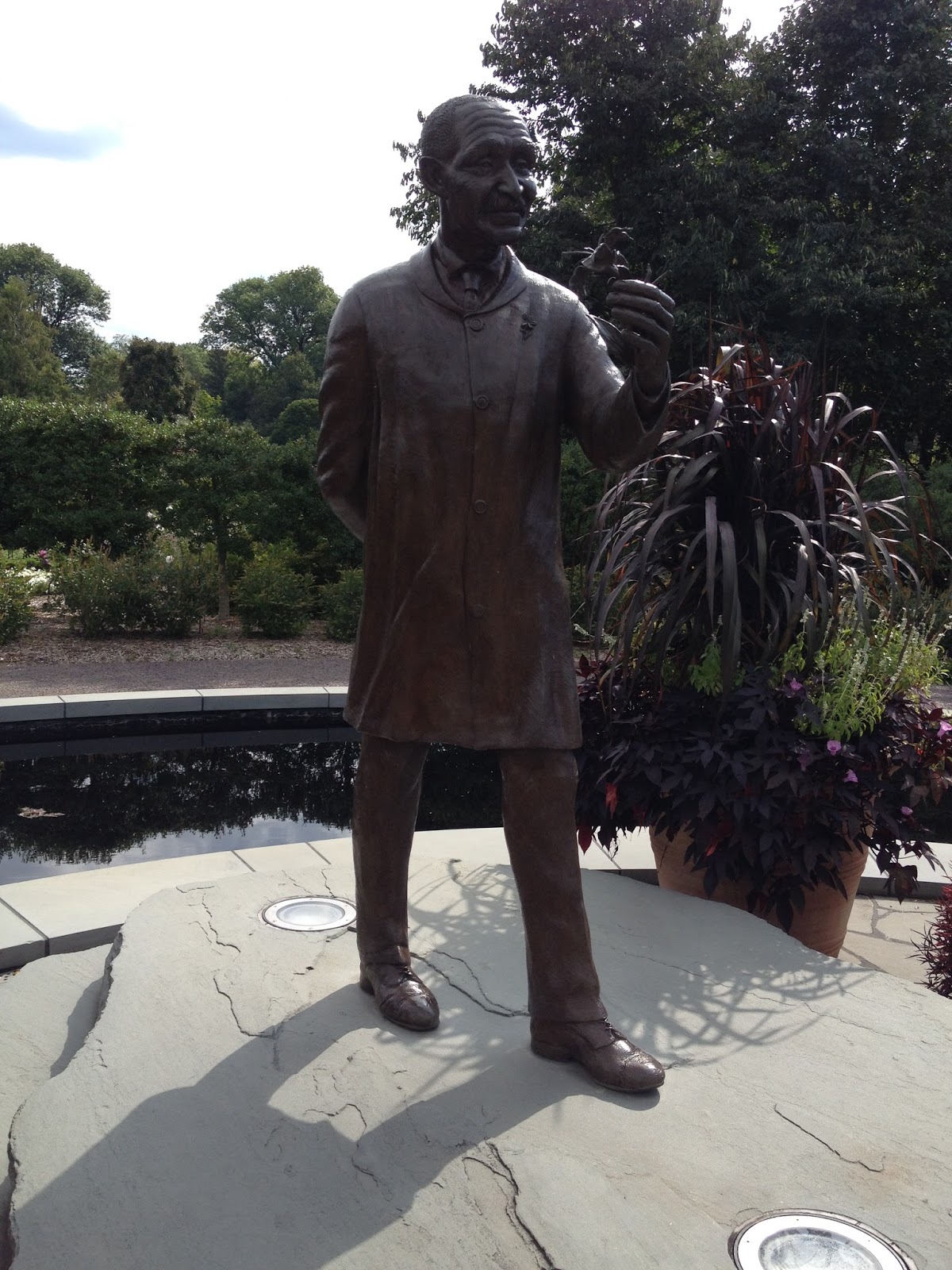
George Washington Carver has his own garden, through which he is forever striding.


View of the hedge maze from the observation tower (which I went up first to figure out the pattern so I wouldn't make wrong turns).


Part of the herb garden: big recipe cards. This is a great idea which I may steal for the demo garden.


My homie Linnaeus.

Other things I really liked: the big children's garden, with plenty of room for running around, a treehouse playground, a cave, and lots of educational tidbits snuck in; and the little snippets of experimentation within all the lush beauty, detail and careful maintenance. There were quite a few signs basically informing the visitor "We don't know for sure if this will work (with the climate, soil, or other circumstances) but hey, let's give it a try!"

Absolute must-see when you're in the St. Louis area.